
Ideas are cheap. But glass? Not so much. (Ruby Stained Glass Notes #02)
Hey Ruby friends,
Welcome to this second episode of the Ruby Stained Glass Notes.
Many thanks to all of you lovely people who replied either to the welcome email or the previous episode! You gave me plenty to think about (we’ll talk about this later).
If you’re new here, sign-up to the pop-up newsletter about this crazy project of mine: a limited-edition stained-glass panel celebrating Ruby.
Let’s dive right in!
Ideas are cheap, but glass? Not so much.
Last week, I decided it was time to commit to the project. So I placed an €400-ish order for tools and glass in various colours. And I received the 12-kilogram package two days later for my birthday!
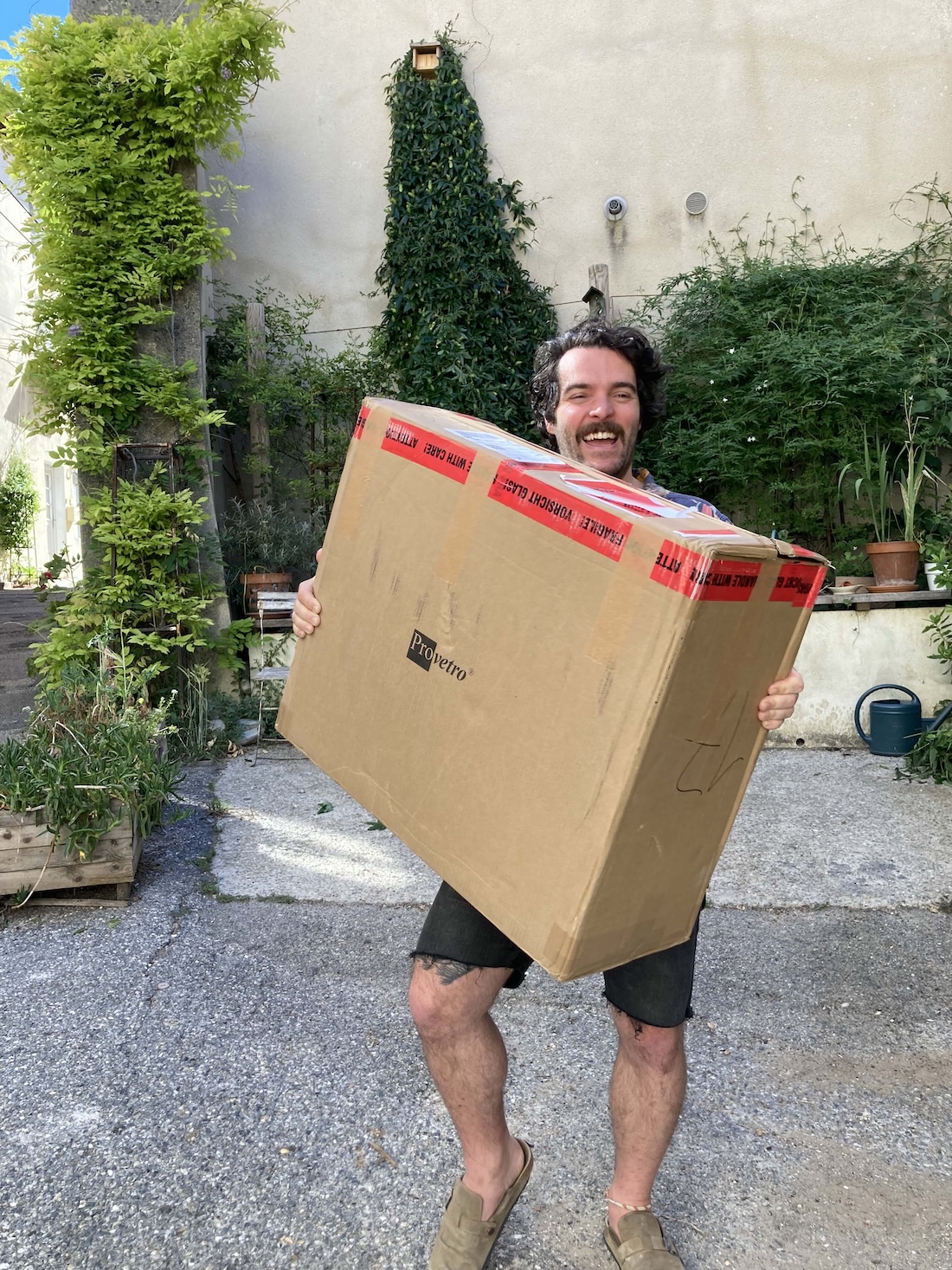
Choosing glass is never as simple as it looks: translucent, semi-translucent, solid, marbled, smooth, textured?
A stained glass panel is a lot like a piece of software: my customers have different needs. Some want to hang it in a window, others want it on their desk. So the glass choice is crucial. I need this panel to work across many configurations without being modified afterward.
If that reminds you of the open-closed principle, it’s quite normal:
Software entities (and stained glass windows) should be open for extension, but closed for modification.
Except that once the stained glass panel is soldered, there is no refactoring.
(I wrote this last sentence for the joke, but if I’m being honest, stained glass windows are refactored a lot in their lifetime).
So, I picked up some semi-translucent glass made in the US by Wissmach.
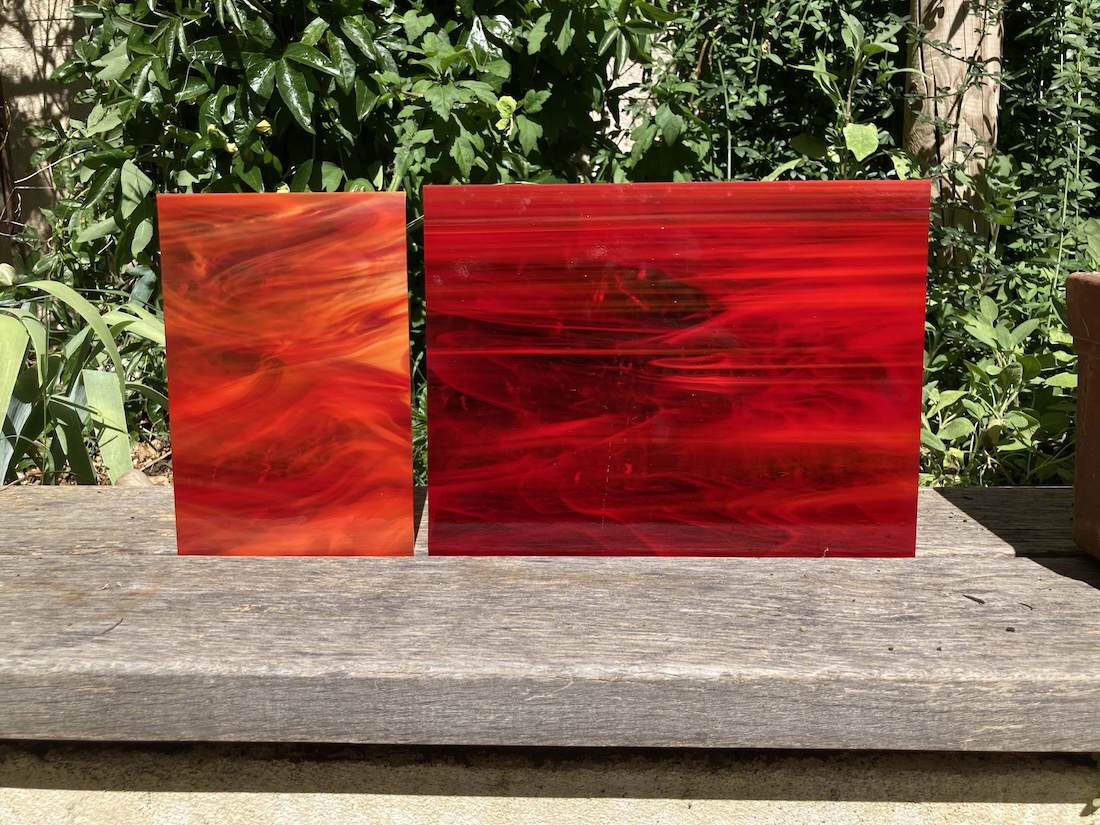
I chose this type of glass because it works well when backlit by a window or lit from the front. The glass sheets are made from a blend of different colours rather than a single one. The resulting cloudy patterns give the sheet depth and texture. A translucent glass, on the other hand, would have been rather plain on such a small piece with no paint to make it pop.
In terms of tools, I bought a glass cutter, a nibbling pincer used to trim the glass, a rotating grinder, a plastic stick to help burnish the copper foil onto the glass pieces and a soldering iron.
I could talk forever about the beauty of cutting glass: the temperament of each sheet of glass, the smell of cutting oil, the importance of the noise made by the diamond, or how medieval stained-glass makers were cutting glass. Is this something you’d like me to talk about? Hit reply and let me know.
Picking up old tutorials
I searched through my bookshelves and found the first book I ever bought on stained glass making. I remembered it had a couple of pages on making Tiffany stained glass windows.
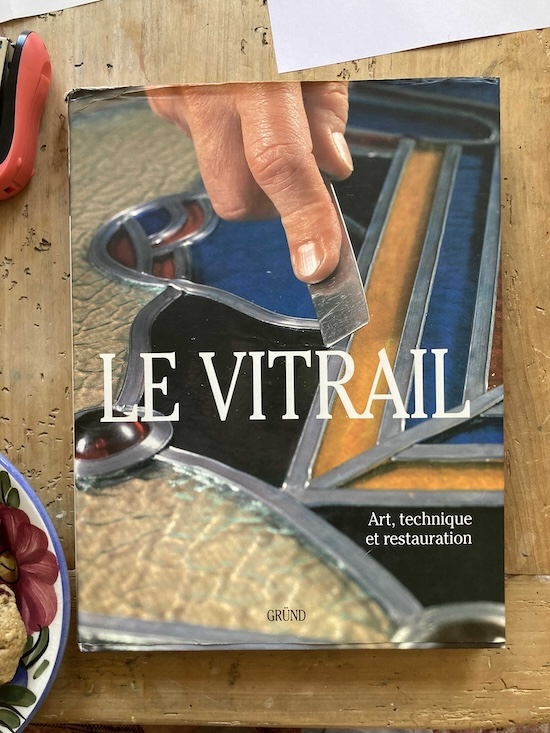
The book already helped me select the tools I need, and it refreshed my memory. Hopefully, when I start building the panel, I won’t make too many mistakes.
What I learned from your emails
As I was saying earlier, a bunch of people replied to my last email and shared ideas about what they’d like to see/have.
One of the questions I asked last time was: How do you want to display it?
Half of you said you’d like to hang it from a window. The other half said you’d like to put it on your desk.
I think I’ll arrange for these options to be selected once the panels are up for sale.
Hanging on a window is pretty straightforward. It could be solved with two soldered loops and a small chain.
For the desk configuration, I might get in touch with a woodworker friend of mine. Maybe she could help me figure out a design for a wooden stand.
Is this something you would be interested in as an option?
To conclude on the materials, I also bought some paint that can be cooked in domestic ovens. Since I was trained as a snob whose stained glass windows had to last for a hundred years, I would not even consider using it. But for a decorative panel that will stay indoors? I’m willing to try it.
Next week, I’ll start working on real-size preparatory drawings, turning a mere screenshot into a proper design.
As always, your ideas and suggestions are most welcome! Hit reply and let me know:
- What do you think of the glass I picked up?
- Would you like me to nerd a bit more about the technique and know-how of stained glass making?
- Wooden stand as an option? Favourite wood?
Cheers,
Rémi - @remi@ruby.social
