Finishing the square panel – part 02 (Ruby Stained Glass Notes #09)
Hey Ruby friends,
Welcome to episode 09 of the Ruby Stained Glass Notes. Last time, I started working on the square panel.
If you’re new here, you can sign up to this pop-up newsletter about this crazy project of mine: a limited-edition stained-glass panel celebrating Ruby.
Let’s go and solder that panel!
I finished the square panel
Last week, I started working on the square version of the stained-glass panel. Well, I’m happy to report that this version is now done!
I spent the morning (it’s Friday morning for me) in my basement wrapping the pieces in copper foil and soldering them together, while listening to some music. It’s a great way to spend the morning!
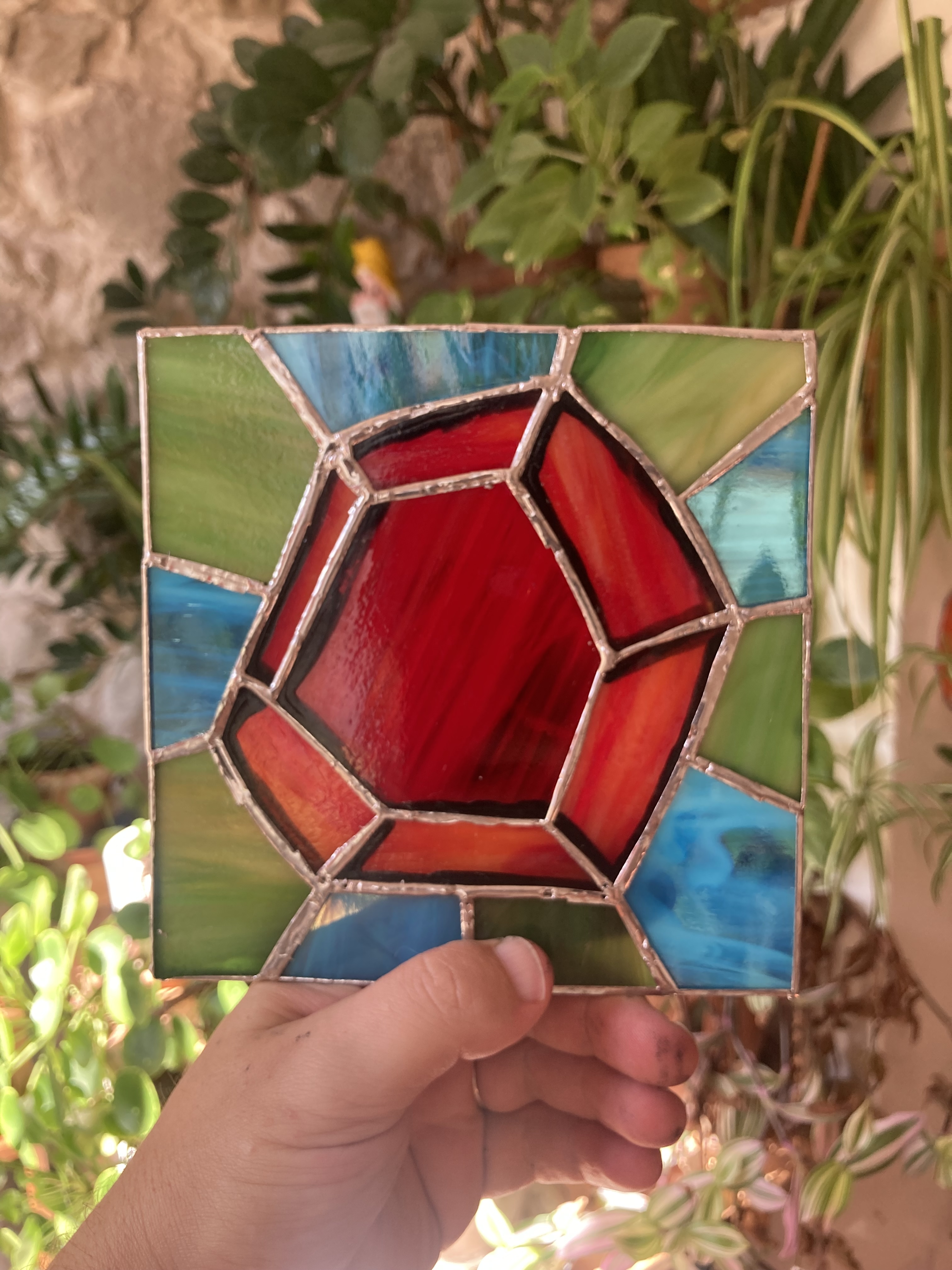
I’ve had the square panel in front of me for a few hours now, and I’m very happy with the result. I like that it’s made of glass of different opacities, letting the background peek through in the blues and greens. The contrast between the radiating pieces and the Ruby works pretty well too.
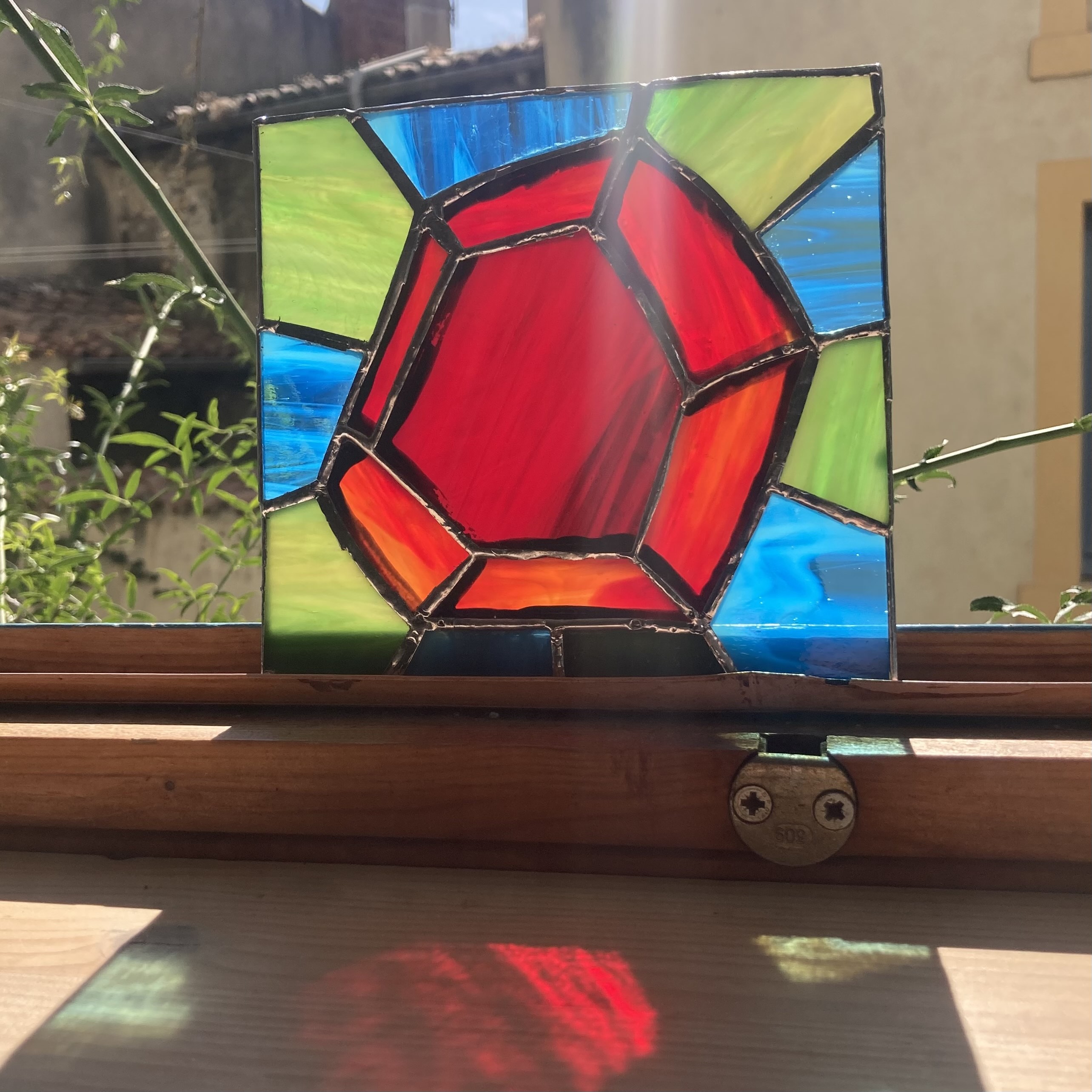
The patina hasn’t arrived yet (early next week, fingers crossed 🤞🏻). The solder and the black paint will look much nicer once the solder has darkened.
The craftsperson’s curse: we always focus on the imperfections
While building the panel, I realized that I was very intent on listing all the imperfections: a 1-millimeter gap that shouldn’t be there, some soldering that should be thicker, a dent in the paint…
Then I passed the finished panel to my wife, and she… just enjoyed it and complimented me on building “something quite beautiful.” 🤷🏻♂️
It’s like when I’m writing software. I’ll finish a nifty bit of programming, and I’ll focus on the wonky abstraction, on the parts where there’s room for improvement.
Sometimes, we’re just looking for a reason to be hard on ourselves instead of simply enjoying something that we built ourselves with whatever skills we have.
I often talk about the parallels between being a craftsperson and being a software programmer. One of these is that when you’re making stained-glass windows, there’s nothing on your workbench in the morning. And by the end of the day, you end up with something physical, tangible. You built something that will exist in the world and give joy to people.
After I quit stained-glass making, I held a lot of different jobs for many years. I worked in museums, in art galleries, in marketing. And during that time, I’d lost that feeling of making tangible things.
But when I learned programming? It only took me a couple of weeks to realize I had that feeling once more. The feeling of starting with a blank sheet and making cool things for real people.
Adaptability is the name of the game
Whether you’re making stained-glass windows, writing software, or (God forbid!) babysitting AI agents, you often have to adjust your initial plan as your assumptions turn into proper feedback.
I always say I like to get software in front of real people fast so we can get critical feedback as soon as possible and adjust as we go. Well, as I’m building this panel, it’s quite the same.
- Solder is too bright? Let’s darken it with some patina!
- Paint is chipping? Let’s check the oven!
- Copper foil is too frail along the panel’s edge? Let’s order some sturdier one!
- Both the square and the freeform panels are cool? Why not offer both versions instead of just one?!
As Hannibal (of The A-Team fame) said: “I love it when a plan comes together!” (even if it means improvising along the way).
That’s all for this week!
As always, your ideas and suggestions are most welcome. Hit reply and let me know:
- Square or freeform: which one are you rooting for?
- What’s the thing you’re building right now (whether it’s an app, a house reno, or painting WoW figures)?
Cheers,
Rémi - @remi@ruby.social
