What have I been cooking this week? (Ruby Stained Glass Notes #05)
Hey Ruby friends,
Welcome to the fifth episode of the Ruby Stained Glass Notes. As always, my thanks to the people who reached out after the previous episode.
If you’re new here, thank you for signing up to this pop-up newsletter about this crazy project of mine: a limited-edition stained-glass panel celebrating Ruby.
Let’s go!
I cut some glass today!
The day after I sent the last newsletter (so, ten-ish days ago?), my three-bladed scissors finally landed in the mail.
So, I started working on the cartoon right away. The cartoon is an intermediate (and very important) step: you transcribe the lines of your drawing onto thick paper, then cut the pieces out with your fancy three-bladed scissors.
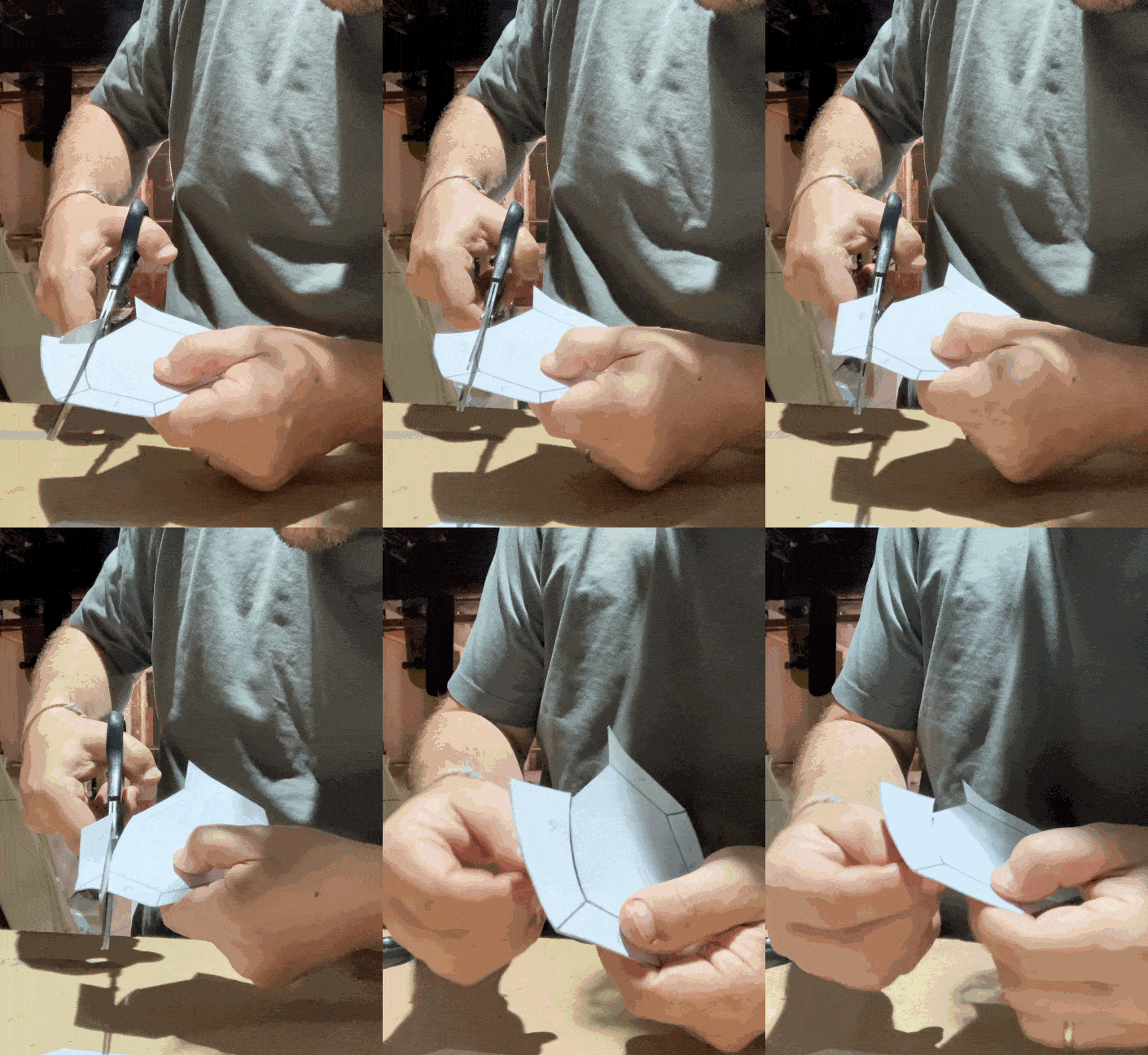
Once the paper patterns are all cut, it’s time to pick a sheet of glass and cut it following the patterns. The idea is to hug the paper pattern and cut as close to it as you can, without going too close and eating into the paper. That’s trickier than it sounds: the glass cutter is dipped in oil to ease the cut, and that same oil is happy to soak and tear your paper.
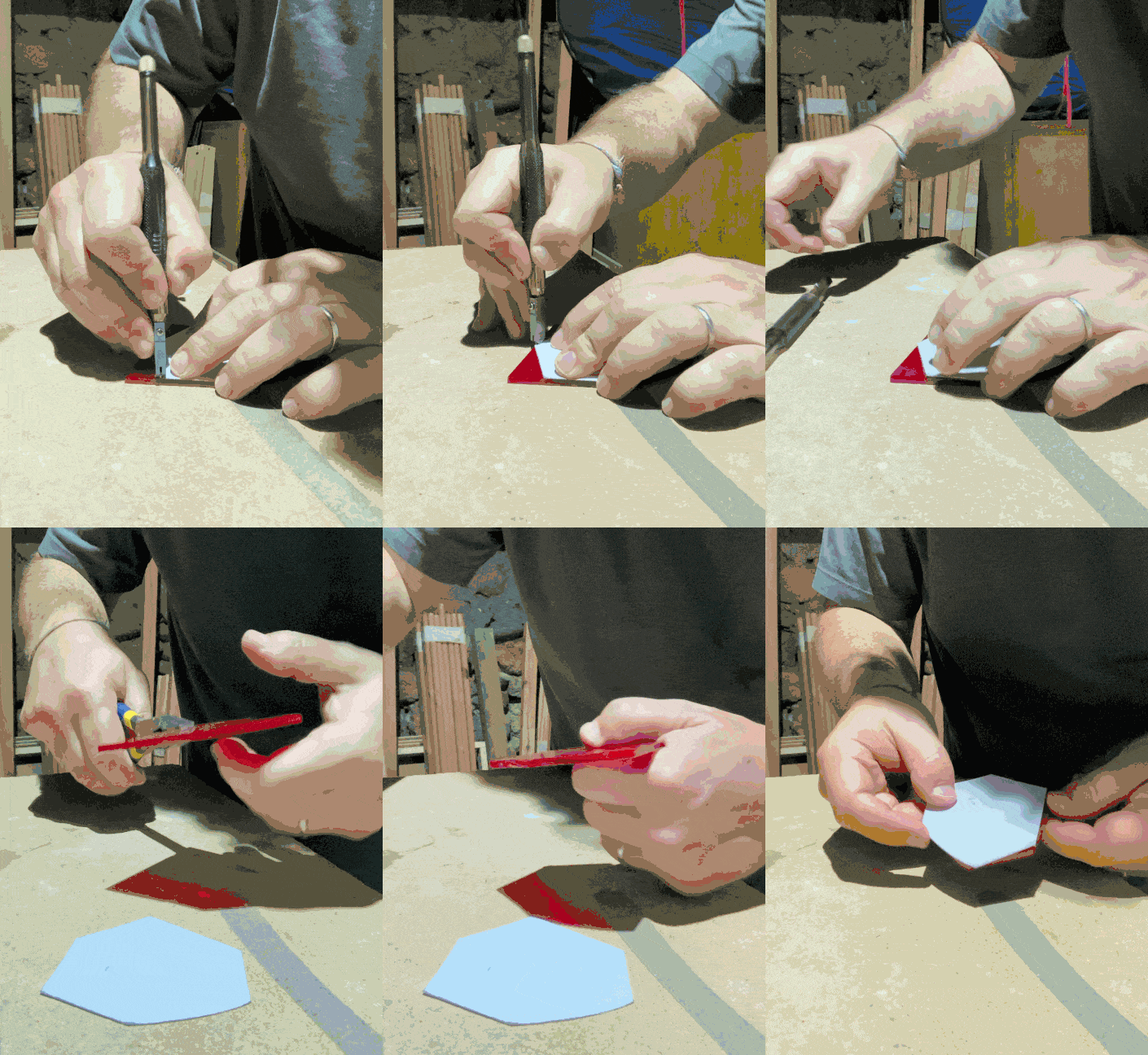
Funnily enough, despite not having cut any glass for 20 years, it never crossed my mind that I could fail at it. And sure enough, my body remembered: the movements, the subtle warning when the cutter leans too hard into the paper, not brushing the table with your fingers to avoid glass shards… Not once did I get a whiff of impostor syndrome. And that is what I kept thinking about while working my way through the pieces.
An aside: where does impostor syndrome come from?
I’ve been a software developer for more than 8 years now. And I still get bouts of impostor syndrome on a regular basis, no matter how many features I’ve shipped or bugs I’ve fixed.
But cutting glass after a 20-year hiatus? Not once did I think I couldn’t make it. How come I can pick up a craft I abandoned two decades ago without ever questioning whether I’m good enough, yet software development still has me questioning my ability?
I don’t have a definitive answer, but let me think out loud and share my initial hypotheses.
The way we welcome rookies matters, and I got two very different welcomes: one when I started stained glass, and one when I started software.
During my first trial week in the stained-glass workshop where I’d go on to apprentice, my future master told me I was quite good for someone who’d never made stained glass before.
So I was handed difficult tasks right away. I remember drawing the full-size cartoon for a 12-meter-high stained-glass window on my own. The risks were real: at that stage, a one-millimeter error can compound into a 2 cm error on the finished piece. And when your stained-glass panels come out two centimeters too large, they don’t fit the window. Being trusted with work like that, and being told I was good at it, shaped how I see my manual ability to this day.
My first interviews out of the software bootcamp did not go as well. Technically, I was marginally better than average compared to my bootcamp mates. What I did have was broader expertise: product design, marketing, customer success… but the people I met only highlighted what I lacked: coding expertise.
I got lucky after and met some incredible people who trusted me and helped me grow. But the first impression had already set. So for years, I wrote the most in-depth posts I could, always making sure I could answer the tricky follow-up, always trying to be perfect. All the luck I eventually got couldn’t quite undo those first few interactions that made me feel small.
Grinding, painting, n’ cooking
Back to the glass pieces.
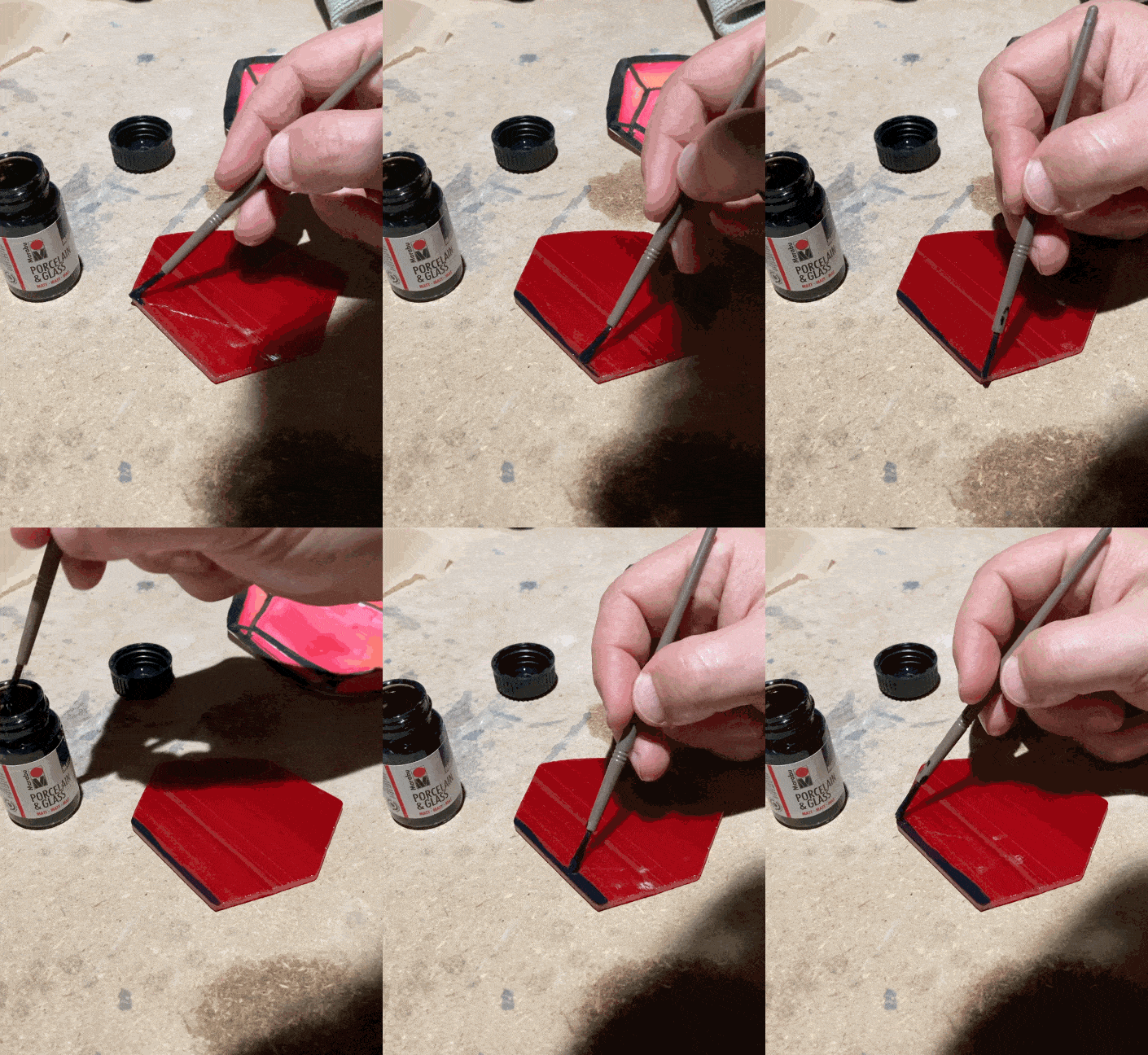
One thing I love about my original drawing is how the lines look hand-drawn with a brush: the thickness isn’t regular. I was worried that marking those lines with copper foil alone would come out too even, too strict. So I decided to give the low-temperature paint a go.
And it looks legit!
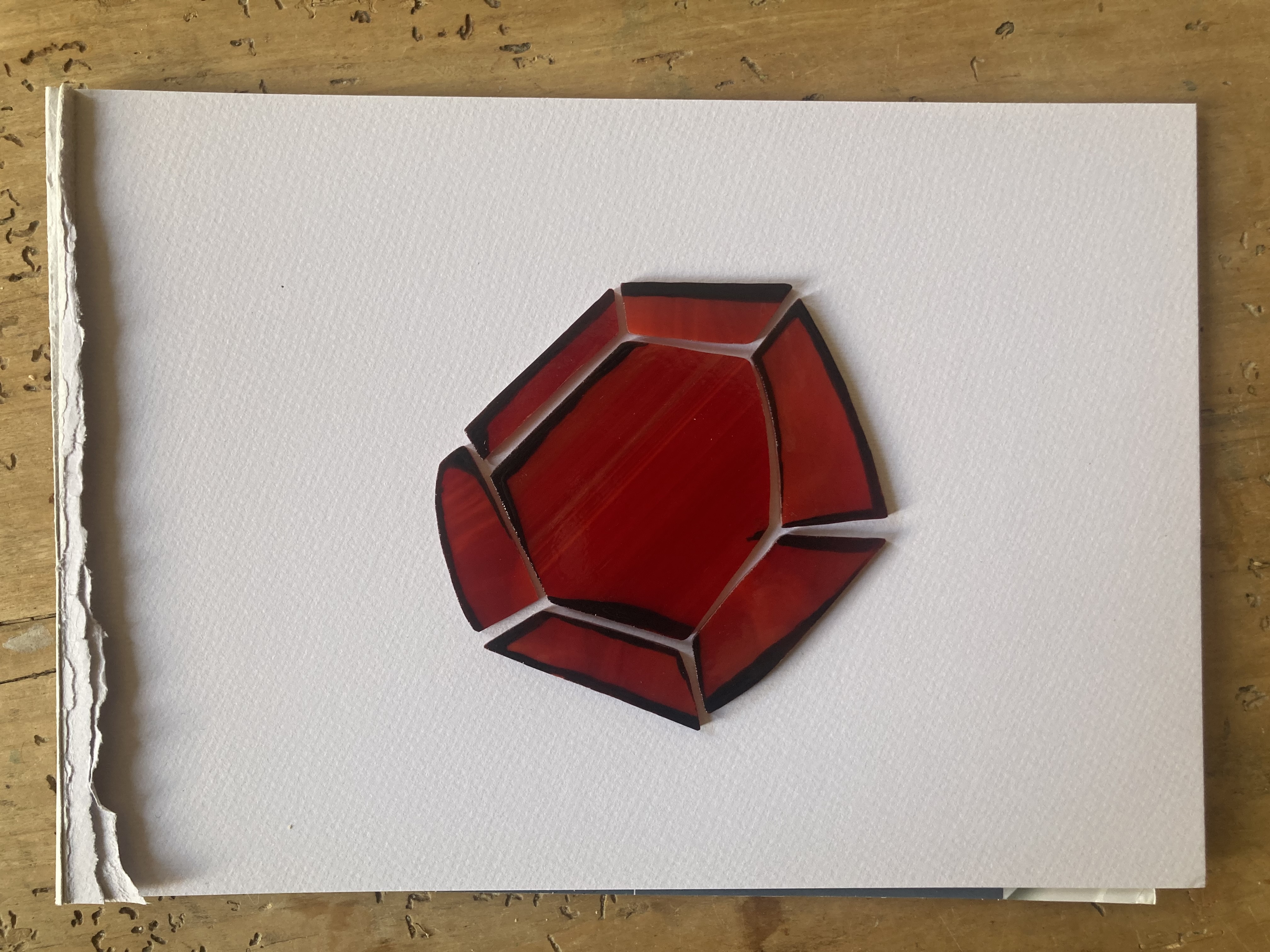
I’ll start assembling the panel next week, so I’ll have plenty of chances to see whether the paint holds up to being scratched. If it does, I’ll use it on the final panel, to give those lines some character, and to sign and number each piece.
That’s all for this week!
As always, your ideas and suggestions are most welcome. Hit reply and let me know:
- What do you think of the painted lines?
- Do you get impostor syndrome? And does it hit differently depending on the craft?
Cheers,
Rémi - @remi@ruby.social
